We want to help give you a better understanding of what you’re buying:
Gas Pool Heaters
The main benefit of having a gas pool heater is that you can run it throughout the entire year and get the same results as long as you have the gas. This extra cost could be seen as a con depending on the price of gas. You can also run these on propane gas, which may be more affordable. So, while the upfront cost is cheaper than a pool heat pump, you will be spending more to keep it going.
Another thing to think about is this option runs best in small bursts to heat the water quickly. You will have to turn it off and on to maintain the heat during your dip.
Pool Heat Pumps
These heat pumps run off electricity and are safer for the environment. Pool heat pumps work for in-ground and above-ground pools. These devices take heat from the outside air and transfer it to the water. For it to work at its most efficient operation, the air should be 45 degrees or warmer.
And while the initial cost may be higher, you will notice they last longer than gas ones by up to 10 years and cost less to run throughout the year on average.
Understanding the Fundamentals of Pool Heaters
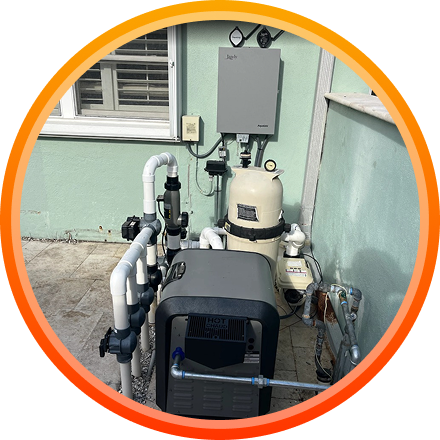
Heat pump systems for your pool work similarly to the pump that heats your home. Rather than generating heat, a heat pump uses electricity to capture heat and direct it from one place to another. A pool heat pump circulates the pool’s water by passing it through a filter and the heater itself. The fan in the heat pump draws outside air and directs it over an evaporator coil, which absorbs the heat and turns it into a gas. The gas then passes through a compressor to increase its intensity before a condenser transfers heat to the water, ultimately elevating your pool’s temperature.

 Peace of Mind
  Property Protection
  No Frustration
  No Surprises
  On-Time Installation
  No Lemons
  Comfort Guaranteed
  No Risk
